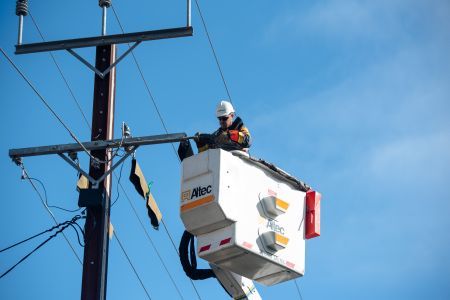
We’re reducing greenhouse gas emissions by installing rooftop solar and electric vehicle (EV) chargers and fostering partnerships to build climate resilience.
We’re committed to stronger action on climate change
Our changing climate will cause problems, not just for us but also for future generations. Some of the ways it will affect us all include:
- Heavier floods will put pressure on stormwater drains
- Beaches will erode and there will be storm surges
- There will be more extremely hot days and more heatwaves
- There will be more very high and extreme fire danger days
- There will be less water in rivers and lakes
- Conditions for native plants and animals will worsen
You can find out more about Australia’s future climate from the CSIRO, Australia’s National Climate Risk Assessment National Climate Risk Assessment | Australian Climate Service Website and South Australia’s Statewide Climate Risk Assessment.
Reducing community greenhouse gas emissions
Our local area has a large population and a high level of commerce and industry, so our major sources of greenhouse gas emissions are gas, transport, and electricity. These findings are shown in Port Adelaide Enfield's community emissions profile, called Snapshot.
We've already started helping you to reduce your emissions by:
- Installing public EV charging stations in partnership with Jolt
- Sharing our EV chargers with the community on Nile Street, Port Adelaide
- Delivering our Integrated Transport Strategy
- Offsetting transport greenhouse gas emissions associated with the operation of our domestic waste trucks
- Providing grants for small-to-medium businesses so they can improve their sustainability, reduce emissions and purchase energy efficient technology and renewables through our Green Business Incentive Scheme. Learn more about Grants for businesses
Reducing the City of PAE’s greenhouse gas emissions
We have set targets to reduce our greenhouse gas emissions by at least 30% by 2025 and by at least 60% by 2030 from our 2020-21 baseline. We also plan to carve out a path to net zero emissions, starting in 2030.
We have exceeded our 2025 targets, reducing our emissions by more than 45%!
We have done this by:
- Purchasing 100% renewable energy
- Electrifying our light vehicle fleet
- Putting solar panels on our buildings
- Reducing gas use through electrifying equipment in our buildings
You can see how we’re doing and check progress through our emissions dashboard and the Living Environment Report Card 2022-23, the Living Environment Report Card 2023-24 and the Living Environment Report Card 2024-25.
Read our Corporate Net Zero Emissions Plan
Our emission reduction progress
LED Lighting upgrades
During 2023–24, we updated approximately 4,800 residential streetlights with energy efficient LEDs to save cost and reduce direct greenhouse gas emissions.
Our climate partnerships
AdaptWest
We've partnered with the City of Charles Sturt and the City of West Torrens to understand how climate change is affecting Western Adelaide and to:
- Review climate change science
- Take a snapshot of our area’s environmental, social and economic features
- Identify what we value in our area and assess how at risk it is
- Work out how we respond to all these challenges
AdaptWest is partially funded by the three partner councils, with additional funding for a co-ordinator role provided by Green Adelaide.
AdaptWest Cool Spaces
Heatwaves and rising energy costs can make it hard to keep cool at home. Through our Adapt West Partnership, we are working to keep the community stay safe and comfortable in hot weather. Cool Spaces are air‑conditioned public places where you can escape the heat during hot days and heatwaves. As part of this initiative, several air-conditioned public cool spaces, including the five PAE libraries are available across the AdaptWest region.
Our EV Fleet Pledge
We’re a founding partner of the state government’s EV Fleet Pledge as we drive the transition to electric vehicles by:
- Integrating plug-in electric vehicles into vehicle fleets as cost effective and fit-for-purpose models become available
- Developing a Fleet Transition Plan that considers total cost of ownership
- Optimising electricity demand by implementing smart charging solutions
- Improving staff, contractor and supply chain preparedness for plug‑in EV fleet transformation
- Participating in knowledge sharing events and annual progress reporting